
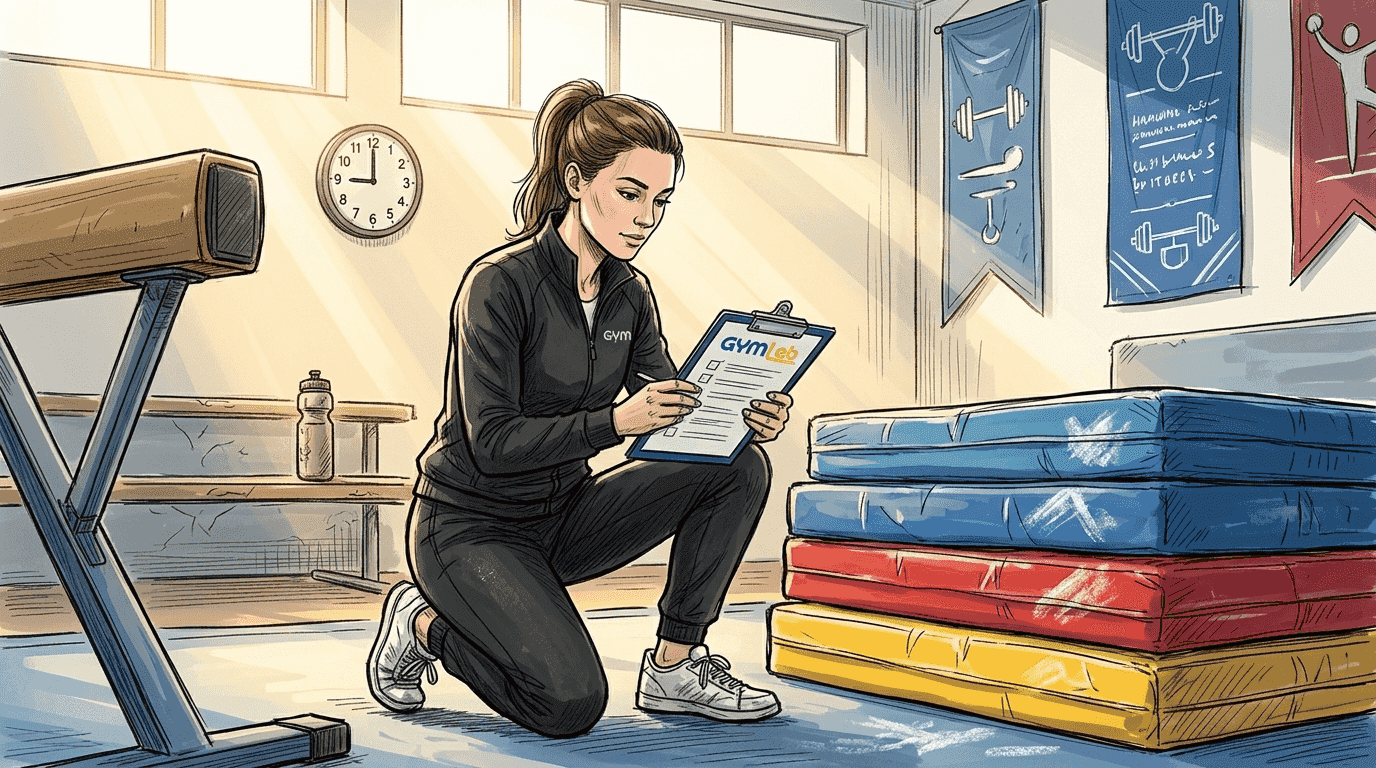
Selecting the right gymnastics mats is crucial for athlete safety and training effectiveness. Understanding mat types, thicknesses, and compliance standards helps make informed, confident purchases. This guide breaks down key mat options, their specifications, and safety considerations for 2026, empowering coaches and gym managers to choose equipment that protects athletes while meeting rigorous industry standards.
Table of Contents
- How To Evaluate Gymnastics Mats: Key Criteria For Safety And Durability
- Exploring Popular Gymnastics Mat Types And Their Ideal Uses
- Comparing Gymnastics Mats: Dimensions, Certifications, And Practical Features
- Choosing The Right Gymnastics Mats For Your Club: Expert Tips And Decision Factors
- Find Premium Gymnastics Mats And Gear At GymLab
- Frequently Asked Questions
Key takeaways
| Point | Details |
|---|---|
| Minimum thickness for safety | High-impact mats require 12cm thickness for proper impact absorption during elevated activities. |
| Mat type diversity | Panel, crash, air track, and competition mats serve different skill levels and training purposes. |
| Safety certifications | ASTM and CPSIA standards ensure mats are toxin-free and meet quality benchmarks. |
| Competition compliance | FIG norms mandate specific standards for vault equipment and competition mats. |
| Durability features | Heavy-duty handles and antibacterial surfaces extend mat lifespan in busy training environments. |
How to evaluate gymnastics mats: key criteria for safety and durability
When coaches and gym managers assess gymnastics mats, several critical factors determine whether equipment will protect athletes while standing up to rigorous daily use. These evaluation criteria form the foundation for confident purchasing decisions.
Thickness and impact absorption capacity matter most when gymnasts are performing high-elevation skills. Mats for high-elevation activities require 12cm minimum thickness to provide adequate shock absorption during landings from bars, vault, or beam dismounts. Thinner mats work for lower-impact activities like floor warm-ups or stretching, but any apparatus work demands substantial cushioning.
Material density and construction quality directly affect how well mats protect athletes over time. Closed-cell foam cores resist compression better than open-cell alternatives, maintaining their protective properties through thousands of impacts. Durable vinyl covers resist tears and punctures that occur when mats contact apparatus, equipment carts, or wall edges during storage and setup.
Safety certifications provide objective validation of mat quality and composition. ASTM standards ensure mat quality through rigorous testing protocols that measure impact absorption, material durability, and chemical safety. CPSIA compliance guarantees mats contain no harmful toxins or heavy metals that could affect athlete health. Pro Tip: Always verify current certifications before purchasing, as non-certified equipment at FIG-sanctioned meets invalidates results and creates liability exposure.
Surface technology influences both safety and performance. Non-slip textures prevent feet from sliding during tumbling passes or landings. Moisture-wicking surfaces keep mats dry when athletes sweat heavily during intense training sessions. Some manufacturers integrate chalk-resistant coatings that maintain traction even when gymnasts apply hand chalk before apparatus work.
Durability features extend mat investment value in high-traffic club environments. Heavy-duty handles on all four sides facilitate safe movement by multiple staff members. Reinforced stitching at stress points prevents seam separation. BACshield antimicrobial treatments provide anti-fungal properties that combat bacteria growth in warm, humid gym conditions. These features may increase upfront costs but dramatically reduce replacement frequency.
Every gym has unique needs based on training volume, skill levels, and apparatus configuration. Evaluating mats against these criteria helps match equipment specifications to your facility's specific demands. The right combination of thickness, materials, certifications, and durability features creates a safer training environment while maximizing equipment lifespan.
Quality gymnastics mats represent a fundamental investment in athlete safety. Cutting corners on thickness or certifications exposes your club to injury risk and potential liability.
Exploring popular gymnastics mat types and their ideal uses
Gymnastics clubs need different mat types for various training activities, skill levels, and space constraints. Understanding the distinct characteristics of each mat category helps managers build comprehensive equipment inventories.
Panel mats offer versatility for fundamental skills and space-conscious facilities. Panel mats measure 1⅜" or 2" thick and fold into compact sections for storage. These mats work well for handstand practice, beam dismount landings, and floor exercise warm-ups. Their moderate thickness provides adequate protection for skills where gymnasts don't achieve significant height. Folding panels stack easily in closets or against walls, making them ideal for clubs with limited storage space. Most panel mats feature vinyl surfaces that wipe clean quickly between training groups.
Crash mats deliver maximum cushioning for high-impact skill development. Crash mats range from 3" to 6" thick and use dense foam cores engineered to absorb forceful landings. Coaches position these mats under bars during release move training, beneath vaults for landing practice, or at the end of tumbling passes when athletes are learning difficult dismounts. Some crash mats incorporate layered foam densities that provide both initial impact absorption and secondary support. Their bulk makes storage challenging, but their protective capacity makes them essential for progression training.
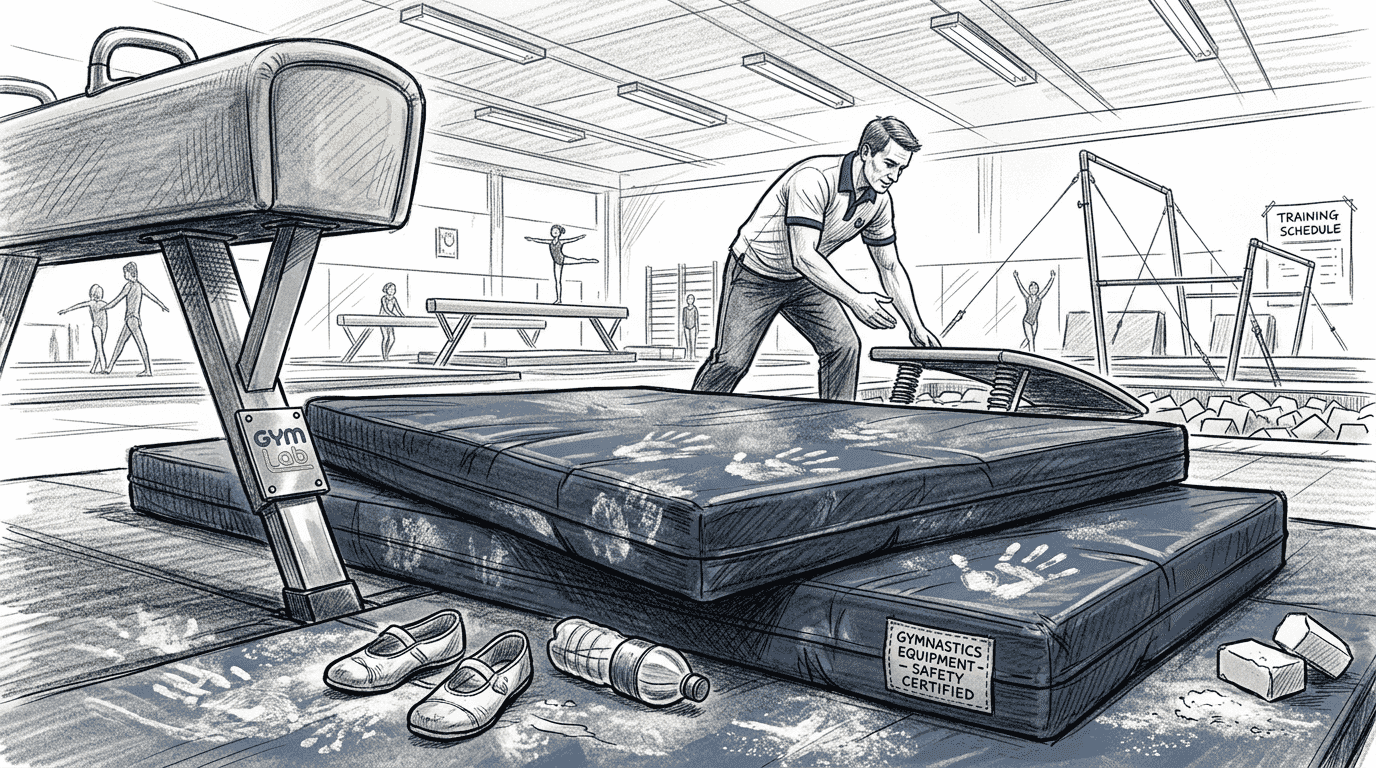
Air tracks provide inflatable practice surfaces suited for building confidence and repetition volume. Air tracks typically measure 3'×10'+ in size and offer adjustable firmness through inflation control. These mats excel for tumbling drills where gymnasts need forgiving surfaces that reduce joint stress during high-repetition training. Air tracks deflate for storage and transport, making them popular for clubs that conduct off-site clinics or demonstrations. Their bouncy characteristics help gymnasts build aerial awareness before transitioning to standard spring floors.
Competition mats meet rigorous standards for championship events and advanced training. Competition landing mats use high-density foam cores with reinforced vinyl covers designed for maximum shock absorption and durability. These mats typically measure at least 12cm thick and feature precise dimensions that comply with FIG regulations. Competition mats include features like seamless construction, uniform firmness across the entire surface, and colors that meet event specifications. While expensive, they provide the consistent performance required for meet preparation.
Each mat type serves distinct purposes in a comprehensive training program:
- Panel mats: fundamental skills, warm-ups, stretching areas
- Crash mats: high-impact landings, skill progression, safety zones
- Air tracks: tumbling repetitions, confidence building, portable training
- Competition mats: advanced skills, meet simulation, championship events
Pro Tip: Create a phased equipment acquisition plan that prioritizes mats based on your current athlete skill distribution and training focus. Start with versatile panel and crash mats, then add specialized options as your program grows.
Matching mat types to training activities optimizes both safety and skill development. Clubs that invest in appropriate mat varieties can accommodate diverse skill levels while maintaining rigorous safety standards. The right combination depends on your facility size, athlete population, competitive goals, and budget constraints.
Comparing gymnastics mats: dimensions, certifications, and practical features
Direct comparison of mat specifications helps coaches and managers evaluate options systematically. This analysis examines thickness ranges, safety certifications, durability features, and portability characteristics across major mat categories.
| Mat Type | Thickness Range | Key Certifications | Portability | Best Use Cases |
|---|---|---|---|---|
| Panel Mats | 1⅜" to 2" (3.5-5cm) | ASTM, CPSIA | Foldable, easy storage | Basic skills, beam dismounts, floor warm-ups |
| Crash Mats | 3" to 6" (7.6-15.2cm) | ASTM, CPSIA | Heavy, limited mobility | High-impact landings, release moves, vault training |
| Air Tracks | 3" to 8" (7.6-20.3cm) inflated | ASTM, CPSIA | Deflates for transport | Tumbling reps, confidence building, portable training |
| Competition Mats | 12cm+ (4.7"+) | ASTM, CPSIA, FIG | Heavy, fixed installation | Advanced skills, meet prep, championship events |
Certification differences carry significant implications. ASTM and CPSIA standards verify toxicity, durability, and performance for general gymnastics mats used in training environments. These certifications ensure foam cores don't contain harmful chemicals and vinyl covers resist degradation. FIG apparatus norms mandate specific standards for vault tables and related competition mats, including exact dimensions, firmness tolerances, and surface characteristics. Clubs hosting sanctioned meets must verify FIG compliance to avoid disqualification.
Durability considerations extend equipment lifespan and maintain safety performance. Quality mats feature 18-ounce or heavier vinyl covers that resist punctures and tears from repeated apparatus contact. BACshield antimicrobial treatments combat fungal and bacterial growth in warm gym environments where moisture accumulates. Heavy-duty handles sewn with reinforced stitching enable safe movement by multiple staff members without seam failure. Corner reinforcements prevent splitting at high-stress connection points.
Portability requirements vary by club operations. Foldable panel mats suit facilities that reconfigure training areas daily or share space with other programs. They stack vertically against walls or fit into storage closets between sessions. Crash mats require dedicated floor space or large storage rooms due to their bulk. Air tracks offer the best portability ratio, deflating to compact sizes for vehicle transport to off-site events. Competition mats typically remain in fixed positions due to their weight and size.
Pro Tip: Request material samples and certification documentation before placing large orders. Reputable manufacturers like a trusted gymnastics equipment manufacturer provide detailed specifications and testing results that verify compliance with current safety standards.
Expert recommendations emphasize proven performance. Prioritize mats from manufacturers with established track records in competitive gymnastics environments. Verify that certifications are current, not expired versions from previous production runs. Inspect warranty terms that protect against premature foam compression or cover deterioration. Consider total cost of ownership, including replacement frequency, rather than just initial purchase price.
Investing in certified, durable mats prevents the false economy of frequent replacements. Quality equipment maintains its protective properties through years of intensive use.
Balancing thickness requirements, certification standards, durability features, and portability needs creates an equipment portfolio optimized for your club's specific training demands. Systematic comparison prevents impulse purchases that don't align with long-term facility goals.
Choosing the right gymnastics mats for your club: expert tips and decision factors
Translating technical specifications into practical purchasing decisions requires analyzing your club's unique training environment, athlete population, and operational constraints. These expert insights guide coaches through situational mat selection.
Match mat thickness to skill level and apparatus type. Thicker mats suit mini bars with center supports where gymnasts dismount from moderate heights. Vault training demands maximum cushioning regardless of athlete age or skill level due to the impact forces involved. Floor exercise work uses thinner panel mats for dance elements and moderate tumbling, reserving crash mats for landings after difficult dismounts. Beam training requires thin panel mats that don't elevate equipment excessively while still protecting against falls.
Evaluate storage capacity and transport logistics before purchasing. Measure storage spaces and doorways to ensure mats physically fit your facility constraints. Foldable mats maximize vertical storage efficiency but may sacrifice some cushioning performance compared to solid-core alternatives. Facilities that reconfigure training areas daily need mats with robust handles that withstand frequent movement. Clubs conducting off-site programs should prioritize deflatable air tracks or lightweight panel mats that fit in vehicles.
Balance budget constraints against long-term durability. Entry-level mats with thinner vinyl covers require replacement every 2 to 3 years under heavy use. Premium mats with reinforced construction and antimicrobial treatments last 5 to 7 years despite higher upfront costs. Calculate cost per year of service rather than focusing solely on initial price. Factor in warranty coverage that protects against premature foam compression or seam separation. Some manufacturers offer trade-in programs that reduce replacement costs when upgrading equipment.
Plan mat layouts that align with apparatus dimensions and training flow patterns. Competition preparation requires mat configurations matching meet specifications for vault runways, bar landing zones, and beam surrounds. Training layouts can use creative mat combinations that optimize floor space utilization. Overlapping panel mats creates larger protected areas without purchasing oversized single pieces. Strategic crash mat placement protects multiple apparatus when positioned at common dismount points.
Consider these decision factors by priority:
- Safety compliance: Verify current ASTM, CPSIA, and FIG certifications as applicable
- Activity alignment: Match thickness and type to primary apparatus and skill levels
- Durability features: Prioritize antimicrobial treatments and reinforced construction
- Space constraints: Ensure mats fit storage areas and doorways
- Budget efficiency: Calculate long-term cost of ownership including replacements
Pro Tip: Layering thinner panel mats over thicker crash mats optimizes cushioning while accommodating different skill progressions. Position crash mats permanently under high-traffic apparatus, then add or remove panel layers based on athlete skill development and training focus.
Consult with coaching staff about training priorities before finalizing purchases. Coaches working daily with athletes understand which skills require additional protection and which areas see heaviest use. Their input ensures equipment investments align with program development goals. Include input from facility managers who handle equipment maintenance and storage logistics.
Successful mat selection balances athlete safety requirements with operational realities. Clubs that analyze their specific needs systematically build equipment inventories that support skill progression while maintaining rigorous protection standards. The right mats enable confident training across all skill levels and apparatus types.
Find premium gymnastics mats and gear at GymLab
Now that you understand how to evaluate and select gymnastics mats for your club, finding a trusted supplier that delivers certified, durable equipment becomes your next priority. GymLab specializes in professional gymnastics equipment engineered to meet the rigorous safety and performance standards outlined throughout this guide.

Their comprehensive mat selection includes versatile panel mats for fundamental training, heavy-duty crash mats for high-impact skill development, and competition-grade landing mats that comply with current FIG standards. Every mat features ASTM-compliant construction with reinforced vinyl covers and antimicrobial coatings that extend lifespan in busy club environments. GymLab's equipment catalog also includes balance beams, bars, vault tables, and related apparatus that integrate seamlessly with their mat systems. Their detailed product specifications provide the dimensions, weights, and warranty information you need to make confident purchasing decisions. Explore their selection to find mats perfectly tailored to your training needs and competition requirements.
Frequently asked questions
What thickness should gymnastics mats be for competition use?
Competition mats require 12cm minimum thickness to absorb impact forces safely during championship events. This standard applies to vault landing mats and other apparatus where gymnasts achieve significant height. Training mats can use thinner specifications depending on skill level and activity type.
How does mat thickness affect gymnast safety during training and competition?
Thicker mats absorb greater impact forces, reducing stress on joints and bones during landings from elevated apparatus. Inadequate thickness allows excessive force transmission that increases injury risk, particularly during repetitive training sessions. Proper thickness creates the cushioning buffer athletes need to train skills safely before competition.
What certifications should mats have to be considered safe and durable?
Look for current ASTM and CPSIA certifications that verify toxin-free materials and performance standards. Competition mats used in sanctioned meets also require FIG compliance that specifies exact dimensions and firmness tolerances. Quality gymnastics mats from GymLab include all necessary certifications with documentation.
Are foldable mats as effective as non-folding mats for serious gymnastics training?
Foldable panel mats provide adequate protection for basic skills and moderate-impact activities when properly constructed. Their hinged design may create slight inconsistencies at fold lines that affect performance compared to solid-core alternatives. For high-impact training, solid crash mats deliver superior cushioning and uniform firmness.
How can clubs ensure mats comply with FIG or ASTM standards?
Request current certification documentation directly from manufacturers before purchasing. Verify that certificates reference the specific mat models you're ordering and check expiration dates. Reputable suppliers provide detailed compliance information and test results without hesitation.
What maintenance features help extend the lifespan of gymnastics mats?
Antimicrobial treatments prevent bacterial and fungal growth in humid gym environments. Heavy-duty vinyl covers resist tears and punctures from apparatus contact. Reinforced handles and stitching withstand repeated movement without seam failure. Regular cleaning with manufacturer-recommended products maintains surface integrity and hygiene.