
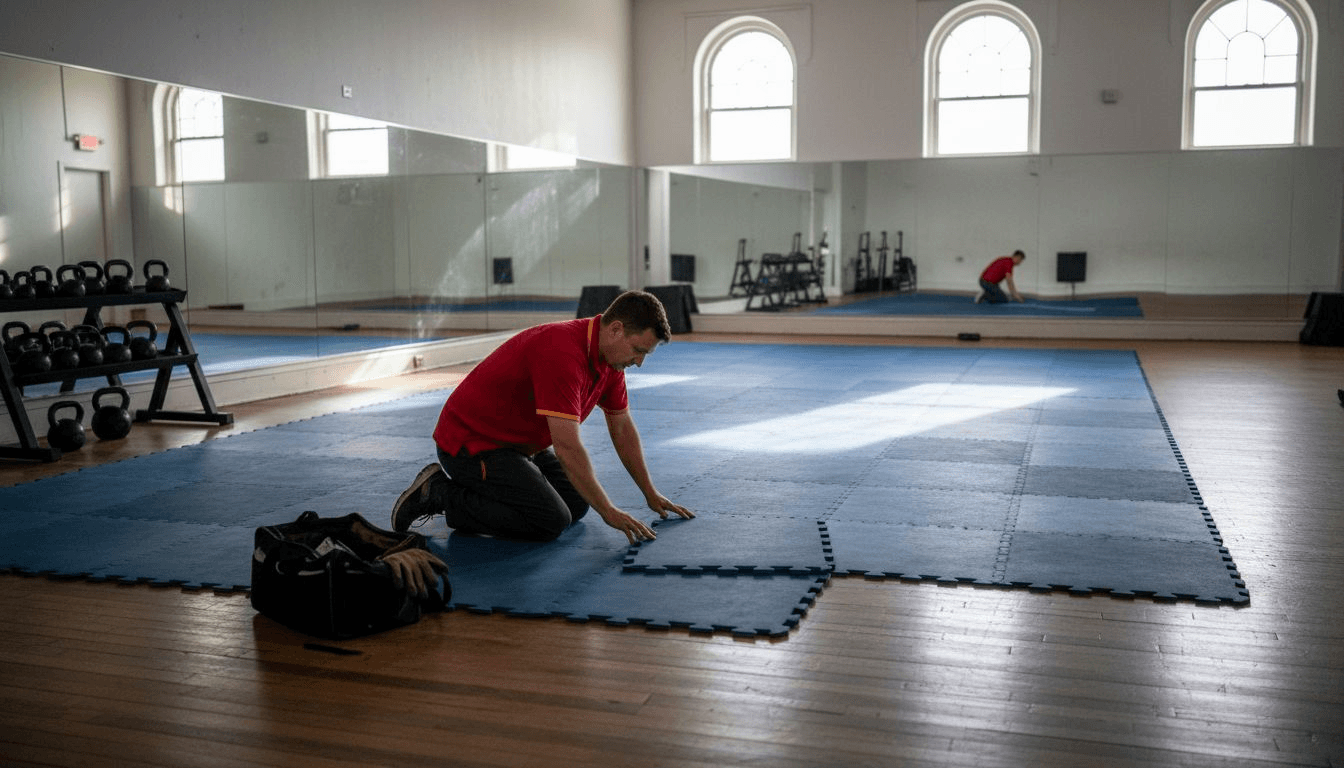
Sports facilities face a constant challenge: balancing athlete safety with budget constraints and space limitations. Research shows that modular gym mats reduce impact injuries by 20% within the first year of installation, making them a practical solution for gyms, schools, and training centers. These interlocking tile systems transform how facilities approach flooring by offering unprecedented flexibility in layout design, simplified maintenance through replaceable sections, and proven safety performance that meets ASTM standards.
Table of Contents
- Introduction To Modular Gym Mats
- How Modular Gym Mats Enhance Safety And Durability
- Customization, Flexibility, And Space Optimization
- Maintenance Efficiency And Cost Considerations
- Common Misconceptions About Modular Gym Mats
- Practical Guidelines For Choosing Modular Gym Mats
- Explore GymLab Modular Mats For Your Facility
- FAQ
Key takeaways
| Point | Details | |-------|---------|| | Customizable layouts | Interlocking tiles create any shape or size configuration for unique facility needs. | | Enhanced safety | ASTM-certified impact absorption and slip resistance protect athletes during training. | | Lower maintenance costs | Replace only damaged sections instead of entire mat systems. | | Space optimization | Maximize facility use with quick reconfigurations for multiple sports and activities. | | Budget flexibility | Phased investment options spread costs over time while upgrading facilities. |
Introduction to modular gym mats
Modular gym mats consist of individual interlocking tiles that connect to form a complete gym floor surface. Unlike traditional single-piece mats that cover fixed areas, modular systems let you build custom flooring layouts piece by piece. Each tile typically measures 1 to 2 meters square and features puzzle-like edges that lock securely with adjacent pieces.
These systems serve gymnastics programs, athletic training facilities, and multi-sport gyms where adaptability matters. Schools use them to convert multipurpose spaces from basketball courts to tumbling areas. Training centers reconfigure layouts seasonally to accommodate different programs. The key advantage lies in the design itself: individual tiles can be removed, replaced, or rearranged without disrupting the entire floor.
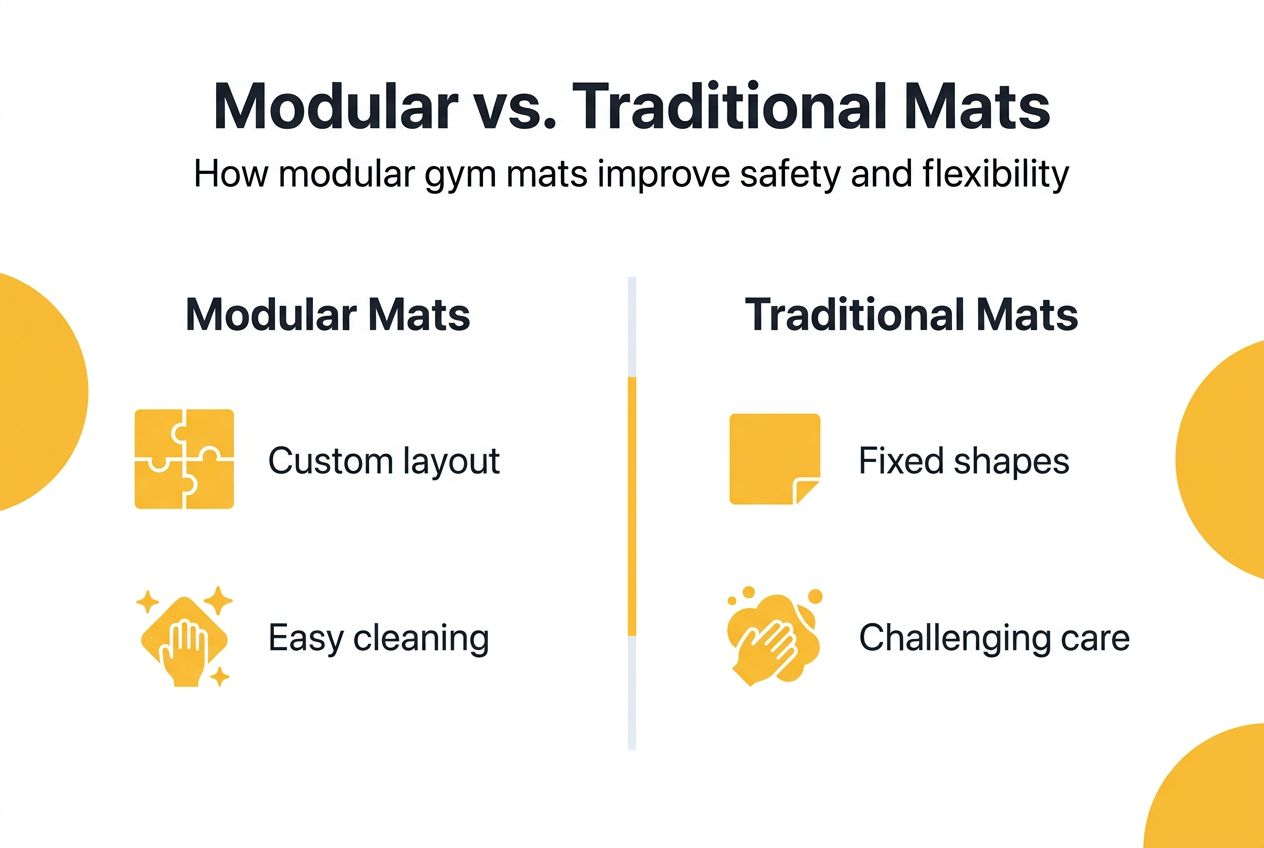
Traditional fixed mats arrive as large single units cut to specific dimensions. Once installed, they cannot adapt to new space requirements or activity types. When damage occurs, you must replace the entire mat regardless of how small the affected area. Modular gym mats and equipment eliminate this limitation by treating your floor as a flexible system rather than a permanent fixture.
The modular approach offers several practical benefits:
- Quick installation without professional contractors
- Ability to expand coverage area incrementally
- Simple storage when floor space serves other purposes
- Immediate replacement of worn sections
- Color coding options for training zones or safety areas
How modular gym mats enhance safety and durability
Safety starts with material composition. Quality modular mats use high-density foam cores wrapped in commercial-grade vinyl. The foam absorbs impact energy from landings, reducing stress on joints and preventing injuries. Vinyl surfaces resist tears, provide consistent traction, and maintain performance through thousands of training sessions.
ASTM safety standards establish minimum requirements for slip resistance and shock absorption in athletic flooring. Certified modular mats undergo rigorous testing to verify they meet these benchmarks. Before purchasing, verify that products display current certification marks and test reports. This documentation confirms the flooring will protect athletes during high-impact activities like tumbling, vaulting, and plyometric exercises.
The modular design itself contributes to injury prevention by maintaining surface consistency. Traditional mats develop low spots, wrinkles, and uneven areas over time as internal materials compress unevenly. Athletes adjust their movements to compensate for these irregularities, increasing injury risk. Individual tiles distribute wear more evenly because each piece supports a smaller area and can be rotated or replaced to maintain optimal cushioning.
Real-world evidence supports these safety claims:
- Gymnastics programs report fewer ankle and knee injuries after switching to modular systems
- Training centers document reduced impact-related complaints from athletes
- Schools note improved confidence among students learning new skills on consistent surfaces
- Coaches observe better technique development when surface quality remains constant
"The difference in athlete confidence was immediate. Our gymnasts trust the landing surface now because it performs consistently across the entire floor." This sentiment from facility managers reflects how reliable equipment impacts training quality.
Pro Tip: Request material safety data sheets and impact test results before purchasing. Compare absorption ratings across products to identify mats that provide the best protection for your specific activities and athlete age groups.
Customization, flexibility, and space optimization
Interlocking tiles enable precise layout customization that matches your facility's exact dimensions and usage patterns. Traditional mats force you to work with standard sizes, often leaving gaps or requiring expensive custom cutting. Modular systems let you add or remove tiles to create the perfect fit for L-shaped rooms, spaces with structural columns, or areas where flooring needs to wrap around fixed equipment.
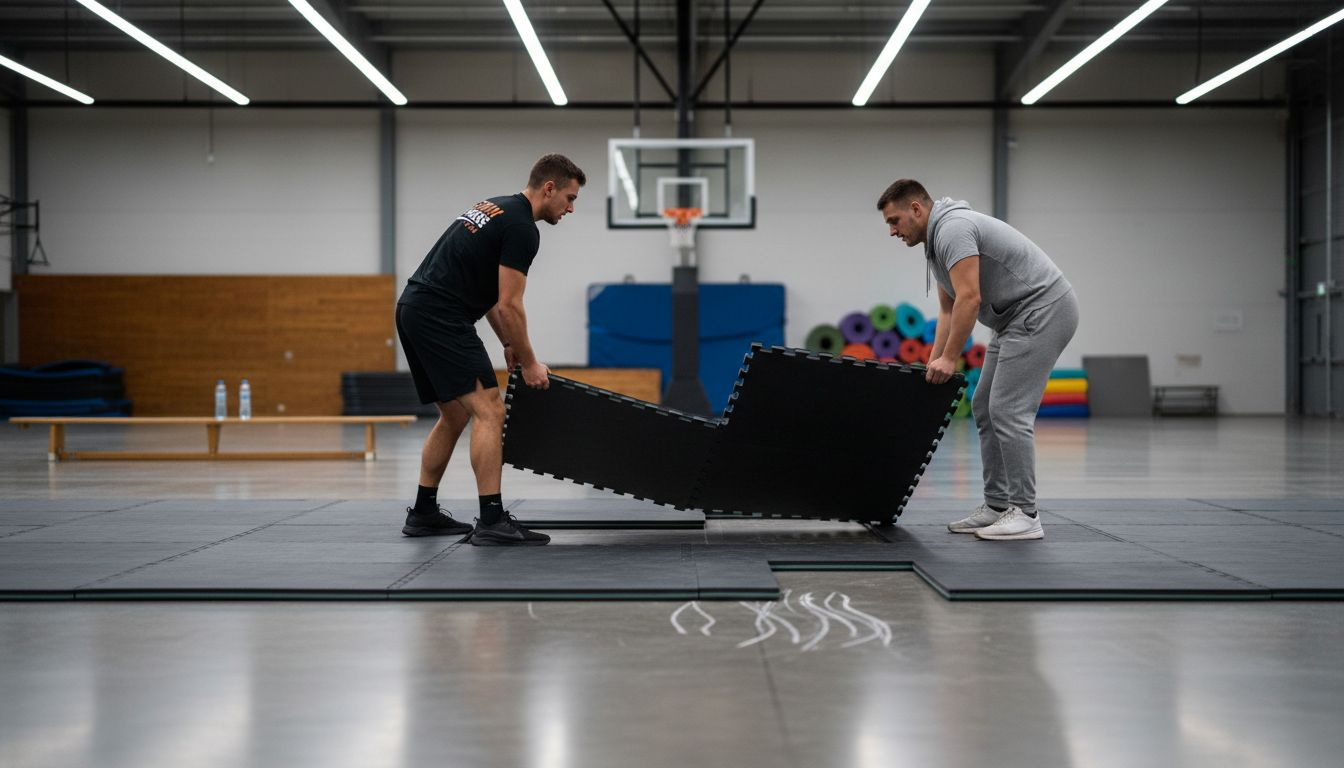
Reconfiguration takes minutes rather than hours. A two-person team can disassemble and rebuild a 10-by-10-meter section in under 30 minutes. This speed supports facilities that host multiple programs throughout the day. Morning gymnastics classes use one layout, afternoon martial arts reconfigure the space, and evening fitness training adjusts it again. The same flooring serves all three activities without compromise.
| Feature | Modular Mats | Traditional Fixed Mats |
|---|---|---|
| Layout changes | Complete in 30 minutes | Requires hours plus labor |
| Custom shapes | Any configuration | Limited to rectangular |
| Expansion capability | Add tiles as needed | Replace entire mat |
| Multi-use support | Instant reconfiguration | Single fixed layout |
| Storage flexibility | Stack tiles compactly | Requires large rolling storage |
Space utilization improvements reach up to 40% in facilities that previously left areas uncovered due to mat size limitations. Those awkward corners, narrow corridors between equipment, and irregular alcoves become usable training space when you can fit flooring precisely. Schools particularly benefit because multipurpose rooms must serve academic, athletic, and community functions throughout the week.
The ability to create temporary training zones adds another dimension of flexibility. Set up a dedicated tumbling strip for private lessons, then integrate those tiles back into the main floor for team practice. Establish color-coded progression zones where beginners work on yellow tiles, intermediate athletes on blue, and advanced on red. Visual organization helps coaches manage large groups and guides athletes through structured progressions.
Pro Tip: Map your facility's floor plan including all permanent fixtures before ordering. Calculate tile quantities for your primary layout plus 10% extra for future expansion, replacements, and configuration experiments. This planning prevents installation delays and ensures you can adapt as programs grow.
Maintenance efficiency and cost considerations
Maintenance requirements directly impact operating budgets and staff time allocation. Modular mats simplify both through targeted replacement and accessible cleaning. When a section shows wear or damage, you remove only those specific tiles and install fresh ones. The damaged sections can be replaced individually, extending overall flooring lifespan by up to 50% compared to traditional mats that require complete replacement when any area fails.
Cleaning becomes more thorough and less time-consuming because you can remove tiles for deep sanitizing. Traditional mats accumulate dirt, sweat, and bacteria in seams and under edges that cleaning equipment cannot reach. Removable sections let maintenance staff pressure wash individual tiles, apply disinfectants properly, and ensure hygiene standards in high-traffic athletic facilities. This accessibility proves critical for schools and gyms where infection control matters.
| Maintenance Factor | Modular Mats | Traditional Fixed Mats |
|---|---|---|
| Partial replacement cost | $200-$400 per damaged section | $2,000-$5,000 full mat replacement |
| Deep cleaning frequency | Weekly detailed sanitizing | Monthly surface cleaning only |
| Repair downtime | 15 minutes for tile swap | 2-3 days for mat replacement |
| Annual maintenance hours | 20 hours | 45 hours |
| Expected replacement cycle | 8-10 years with section updates | 4-6 years full replacement |
Phased investment strategies help facilities upgrade flooring without major capital outlays. Purchase a base coverage area initially, then add sections quarterly as budget allows. This approach distributes costs across multiple fiscal periods while immediately improving athlete safety in priority training zones. Schools facing tight annual budgets particularly benefit from this flexibility.
Cost efficiency extends beyond purchase price to total ownership expenses. Factor in replacement frequency, maintenance labor, and operational disruption when comparing options. A modular system with higher initial per-square-meter cost often delivers lower total cost over a decade of use because you avoid multiple full replacements and reduce staff time spent on maintenance tasks.
Pro Tip: Schedule quarterly inspections of high-traffic tiles and rotate them to lower-use areas. This practice evens out wear patterns and maximizes the lifespan of your entire flooring investment. Keep detailed records of which tiles go where to track performance over time.
Common misconceptions about modular gym mats
Many facility managers hesitate to adopt modular systems based on outdated information or misunderstandings about performance and safety. Addressing these misconceptions helps you make informed decisions grounded in current product capabilities and real-world results.
The belief that interlocking seams create trip hazards stems from early modular designs with raised edges. Modern systems feature beveled or flush connections that create smooth transitions. Proper installation eliminates gaps and movement. Athletes running, tumbling, and landing across tile boundaries experience no interruption in surface continuity when mats are correctly assembled and maintained.
Durability concerns often compare modular mats to industrial one-piece systems used in permanent installations. Quality modular products use identical materials and construction methods. The difference lies in format, not strength. High-density foam cores and reinforced vinyl withstand the same impact forces regardless of whether they come in tiles or sheets. Some facilities actually report better long-term durability with modular systems because damaged areas get replaced before compromising adjacent sections.
Cost efficiency misunderstandings focus solely on initial purchase price per square meter. Traditional mats appear cheaper until you account for:
- Full replacement costs when any section fails
- Labor expenses for installation and removal
- Storage requirements for large single pieces
- Inability to expand coverage incrementally
- Higher maintenance time and supply costs
The misconception that modular mats suit only small spaces ignores their scalability. Professional gymnastics centers, university athletic facilities, and regional training centers use modular systems across thousands of square meters. The format scales from compact home gyms to Olympic-sized competition floors. Success depends on matching mat specifications to your specific activities, not on facility size.
Practical guidelines for choosing modular gym mats
Selecting appropriate modular mats requires systematic evaluation of your facility's unique requirements, safety standards, and financial constraints. Follow these steps to identify products that deliver optimal value and performance.
-
Assess your space dimensions and usage patterns by measuring the exact floor area including irregular sections. Document which activities occur where, noting high-impact zones that need maximum cushioning.
-
Verify safety certifications by requesting current ASTM test reports and material safety documentation. Confirm that impact absorption ratings match or exceed requirements for your specific sports and athlete age groups.
-
Calculate total ownership costs including initial purchase, estimated replacement frequency, maintenance supplies, and labor hours. Compare these figures across modular and traditional options over a 10-year period.
-
Test physical samples before committing to large orders. Request demonstration tiles to evaluate surface texture, interlocking mechanisms, and actual cushioning performance under realistic training conditions.
-
Plan for future expansion by ordering systems that remain available long-term. Verify the manufacturer can supply matching tiles years later when you need to add coverage or replace worn sections.
-
Consider maintenance capacity by evaluating whether your staff can manage tile cleaning, rotation, and replacement. Choose systems that match your team's capabilities and available time.
-
Explore phased investment options that let you upgrade priority areas immediately while scheduling additional coverage for future budget cycles. This approach maintains progress without financial strain.
Pro Tip: Consult directly with suppliers who can provide tailored recommendations based on your specific facility layout, athlete population, and program goals. Experienced vendors help you avoid common sizing mistakes and identify products that deliver the best value for your exact situation. Selecting modular gym mats becomes more straightforward when you work with specialists who understand both product capabilities and athletic facility requirements.
Explore GymLab modular mats for your facility
Transforming your training environment starts with equipment that adapts to your needs rather than forcing you to work around limitations. GymLab gymnastics equipment and mats offer certified modular systems designed specifically for the demands of gymnastics programs, athletic training centers, and educational facilities. Our product range includes options for every budget and facility size, from compact training studios to comprehensive competitive gymnasiums.
Each GymLab modular mat meets current ASTM safety standards while providing the durability that high-traffic facilities demand. We support phased investment approaches that let you upgrade incrementally without compromising athlete safety or program quality. Whether you need to outfit a new facility or replace aging traditional mats, our team provides personalized consultations to match products with your specific requirements.
Pro Tip: Contact GymLab for a customized facility assessment and phased implementation plan. Our specialists help you calculate exact tile quantities, identify optimal layouts, and structure investments across multiple budget periods. This planning ensures you maximize every dollar while continuously improving your training environment.
FAQ
Are modular gym mats safe to use during high-impact activities?
Yes, certified modular mats meet ASTM standards for impact absorption and slip resistance. They provide appropriate protection for gymnastics, tumbling, and athletic training when properly installed. Quality products use high-density foam cores designed specifically for high-impact landings and explosive movements.
How do modular gym mats simplify maintenance compared to traditional mats?
Modular systems allow replacement of damaged sections individually, eliminating the need to discard entire floor coverings. Individual tiles can be removed for thorough cleaning and sanitizing that reaches all surfaces. This targeted approach reduces both labor time and replacement costs while improving overall hygiene.
Can modular gym mats be customized for irregular gym layouts?
Absolutely. Interlocking tile design enables custom shapes and sizes that fit any floor plan including L-shaped rooms, spaces with columns, and areas with fixed equipment. You can create exact coverage that maximizes usable training space in facilities where traditional rectangular mats leave gaps or require expensive custom cutting.
Are modular gym mats cost-effective over time?
Modular mats enable phased investment and partial replacements that reduce long-term expenses. While initial per-tile costs may appear higher, total ownership costs typically run 30-40% lower over a decade because you avoid multiple full replacements. Maintenance savings and extended lifespan through section updates deliver superior value compared to traditional systems.