
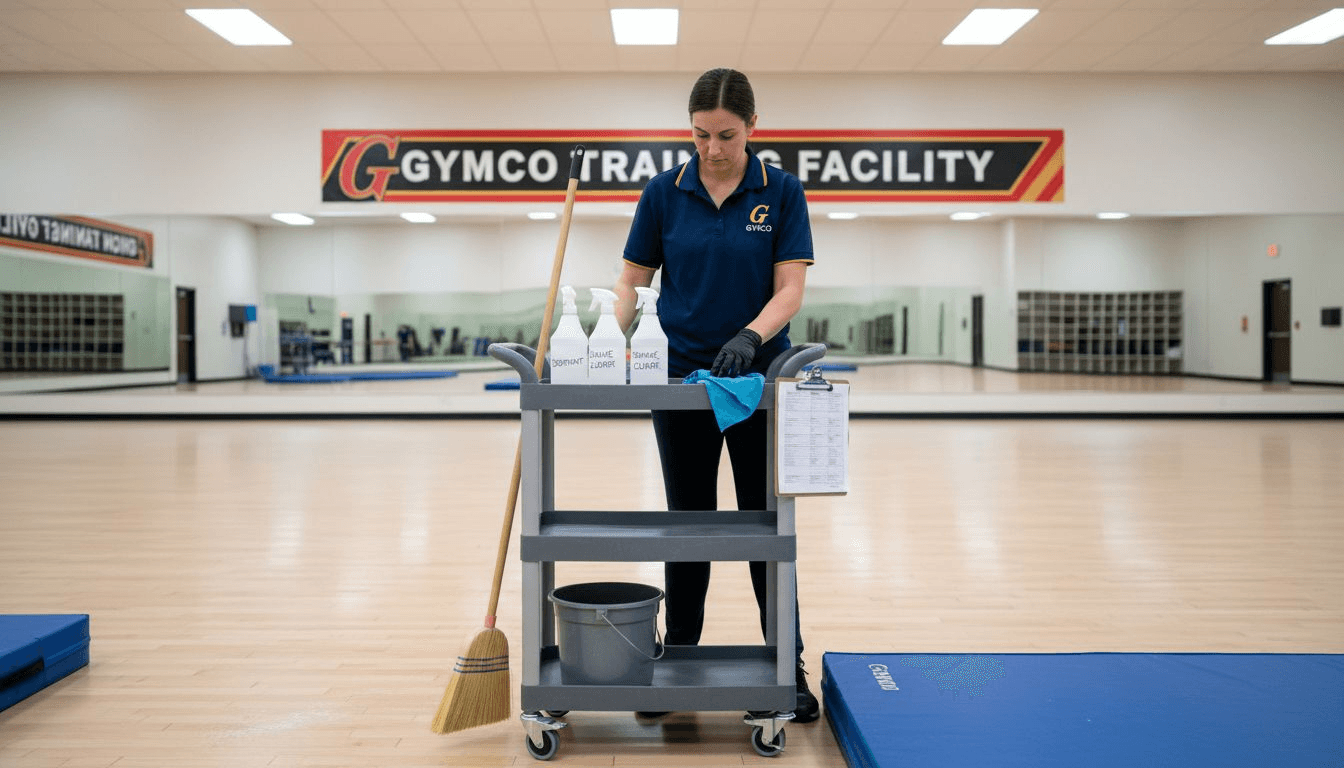
Gymnastics mats endure heavy daily use, collecting sweat, dirt, and wear that compromises both safety and lifespan. Without proper maintenance, facilities face increased injury risks, unpleasant odors, and costly premature replacements. This guide provides practical, proven methods to keep your mats clean, safe, and performing optimally for years, protecting both athletes and your investment.
Table of Contents
- Prerequisites: What You Need Before Starting
- Daily Cleaning Routine
- Weekly And Monthly Deep Cleaning Procedures
- Inspection And Damage Assessment
- Common Mistakes In Mat Maintenance And How To Avoid Them
- Drying, Storage, And Handling Best Practices
- Expected Results And Metrics To Track Success
- Learn More About Gymnastics Mats And Gear
- FAQ
Key takeaways
| Point | Details |
|---|---|
| Daily cleaning prevents damage | Sweeping or vacuuming removes abrasive debris that degrades mat surfaces over time. |
| Weekly inspections catch problems early | Routine checks identify tears, cracks, and compression before they become safety hazards. |
| pH-neutral cleaners protect mat integrity | Harsh chemicals degrade adhesives and foam, shortening lifespan by up to 30%. |
| Proper drying prevents mold | Air drying mats thoroughly after cleaning eliminates moisture buildup and odors. |
| Rolling beats folding for storage | Roll mats to avoid creases and cracks that compromise structural integrity. |
Prerequisites: what you need before starting
Successful mat maintenance starts with proper preparation. Before tackling any cleaning or inspection routine, gather the right supplies and understand safe handling practices.
You need pH-neutral cleaning solutions specifically formulated for foam and rubber gym equipment. Mix these cleaners with water according to manufacturer instructions, typically at ratios between 1:10 and 1:20. Stronger concentrations risk damaging mat materials.
Essential tools include soft-bristle brooms or gym floor vacuums, microfiber cloths, spray bottles, and clean buckets. Avoid stiff-bristle brushes or abrasive scrubbers that scratch mat surfaces. For deep cleaning, consider a soft mop with a washable head.
Safety gear matters. Wear protective gloves when handling cleaning agents, even mild ones. Ensure adequate ventilation during cleaning, especially in enclosed spaces. Keep cleaning products away from athlete areas during use.
Pro Tip: Create a dedicated maintenance station with labeled spray bottles, clean cloths, and inspection checklists. This setup ensures staff can quickly access supplies and follow consistent procedures.
| Supply Category | Specific Items | Purpose |
|---|---|---|
| Cleaning Agents | pH-neutral gym cleaner, distilled water | Safe, effective mat cleaning |
| Tools | Soft broom, vacuum, microfiber cloths, spray bottles | Debris removal and application |
| Safety Gear | Protective gloves, ventilation fans | Staff protection during cleaning |
| Documentation | Inspection checklists, maintenance logs | Track care routines and damage |
Well-prepared facilities complete maintenance faster and more effectively. Staff trained on proper product dilution and application techniques prevent costly mistakes that damage mats or require replacements.
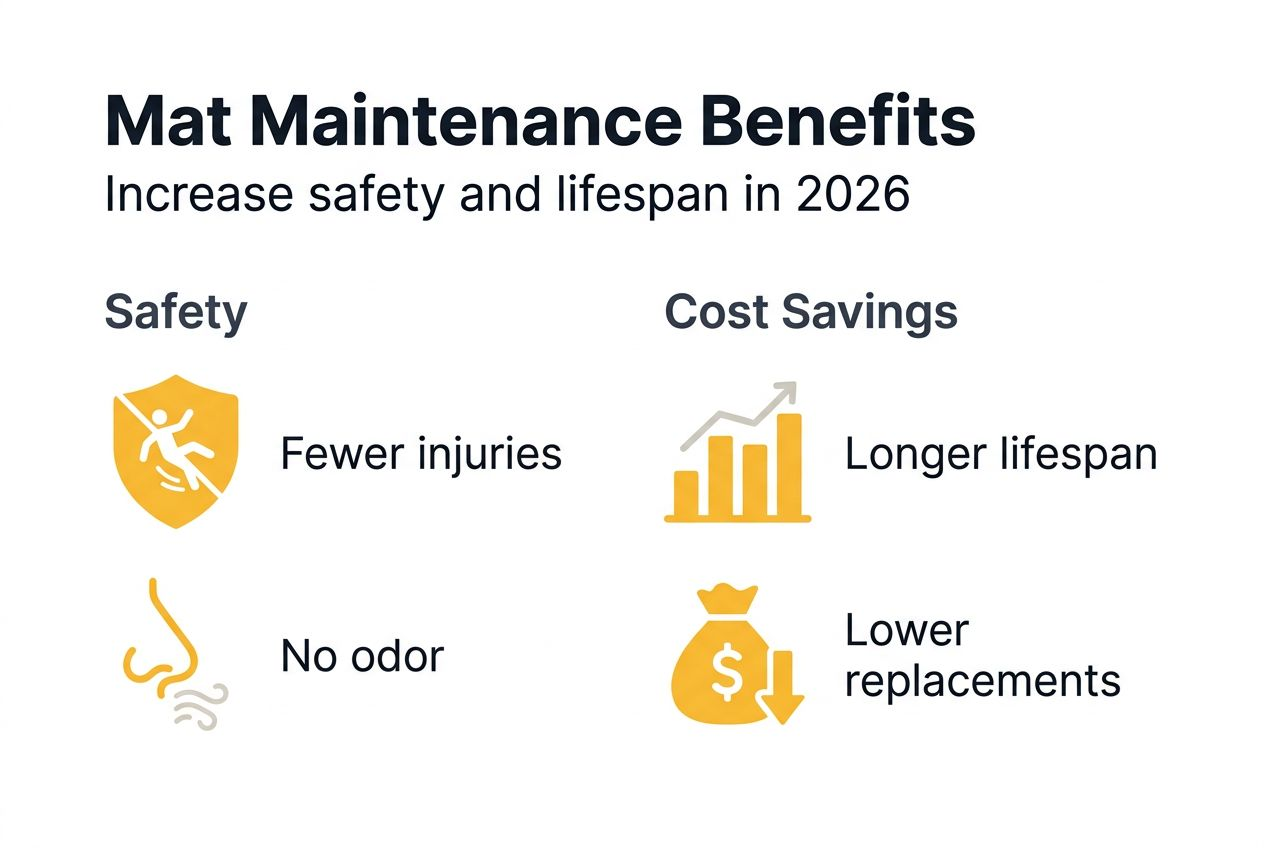
Daily cleaning routine
Daily care forms the foundation of effective mat maintenance. These simple steps prevent debris accumulation that accelerates wear and creates safety risks.
Start by removing dirt and debris daily through sweeping or vacuuming. This prevents abrasive particles from grinding into mat surfaces during use. Use equipment with soft bristles designed for gym floors.
Follow this systematic approach:
- Clear all equipment and accessories from mat surfaces before cleaning begins.
- Sweep or vacuum the entire mat area, paying attention to seams where debris collects.
- Spray affected areas with diluted pH-neutral cleaner for visible sweat marks or spills.
- Wipe cleaned areas with a damp microfiber cloth, using gentle circular motions.
- Allow mats to air dry completely before athletes resume training, typically 15 to 30 minutes.
Spot cleaning matters. Address sweat and moisture immediately after training sessions. Sweat contains salts and acids that degrade foam and vinyl if left to dry on surfaces. Quick attention prevents permanent staining and material breakdown.
Pro Tip: Schedule cleaning during natural breaks in your training schedule. Clean mats between morning and afternoon sessions, or immediately after the final class each day. This minimizes disruption while ensuring mats stay fresh.
"Consistent daily cleaning takes less than 15 minutes but can extend mat life by years. It's the single most important maintenance habit for any gymnastics facility."
Avoid shortcuts. Never use undiluted cleaners, even for stubborn stains. Never apply excessive water that soaks into mat cores. These mistakes cause more damage than the dirt you're trying to remove.
Weekly and monthly deep cleaning procedures
While daily cleaning handles surface maintenance, deeper cleaning removes ingrained dirt and maintains hygiene standards. Schedule these procedures consistently.
Weekly deep cleaning requires more thorough application of pH-neutral cleaning solutions. This process addresses buildup that daily spot cleaning misses.
Follow these weekly steps:
- Prepare cleaning solution by diluting pH-neutral cleaner according to product specifications.
- Apply solution across entire mat surfaces using a spray bottle or soft mop.
- Agitate gently with a microfiber cloth or soft mop head, working in sections.
- Wipe away loosened dirt and cleaning residue with clean, damp cloths.
- Air dry mats completely for several hours before use.
Monthly deep cleaning goes further. For removable mats, consider full submersion cleaning when feasible. Fill a large tub or use outdoor space with hoses. Submerge mats in diluted cleaner, gently agitate by hand, rinse thoroughly with clean water, and air dry completely.
Pro Tip: Rotate your mat inventory during monthly deep cleans. While one set dries, use backup mats to maintain training schedules without interruption.
| Cleaning Frequency | Method | Time Required | Drying Time |
|---|---|---|---|
| Daily | Spot clean, sweep | 10-15 minutes | 15-30 minutes |
| Weekly | Full surface deep clean | 30-45 minutes | 2-4 hours |
| Monthly | Submersion or intensive scrub | 60-90 minutes | 4-8 hours |
Thorough drying proves crucial. Moisture trapped in foam cores breeds mold and creates unpleasant odors. Position mats in well-ventilated areas, ideally with fans to accelerate drying. Never stack or roll wet mats.
Document your cleaning schedule. Track dates and methods used. This creates accountability and helps identify patterns if mats degrade faster than expected.
Inspection and damage assessment
Cleaning alone isn't enough. Regular inspections catch problems before they cause injuries or require expensive replacements.
Weekly thorough inspections should examine every mat systematically. Create a simple checklist covering these critical areas:
- Surface tears or cuts in vinyl covering
- Cracks in foam cores, especially around high-impact zones
- Seam separations where mat sections connect
- Compression damage or permanent indentations
- Loose or peeling edge binding
- Discoloration indicating moisture damage or mold
Examine high-use areas first. Landing zones under bars and beams wear faster than perimeter sections. Flip and rotate mats periodically to distribute wear evenly.
Document findings immediately. Photograph damage, note locations, and record severity. This documentation supports warranty claims and helps track degradation patterns across your mat inventory.
Pro Tip: Train all coaching staff to perform quick visual checks before each practice. Catching fresh damage immediately prevents it from worsening during use.
Early identification changes everything. Small tears can be repaired with mat tape or professional patching. Ignored tears expand rapidly under athlete impact, eventually requiring full mat replacement. The cost difference is substantial.
Establish replacement thresholds. Any tear longer than 2 inches, compression deeper than 1 inch that doesn't recover, or seam separation wider than 0.5 inches warrants immediate removal from service. Safety always outweighs repair costs.
Schedule professional assessments annually. Expert inspectors identify subtle structural issues that in-house checks might miss. This outside perspective catches problems early and validates your maintenance effectiveness.
Common mistakes in mat maintenance and how to avoid them
Even well-intentioned facilities make errors that shorten mat lifespan and compromise safety. Understanding these pitfalls helps you avoid costly mistakes.
Over-wetting ranks as the most damaging error. Excessive water causes delamination and foam breakdown, affecting over 25% of poorly maintained commercial gym mats. Apply cleaning solutions sparingly. Mist surfaces rather than soaking them. Wring out cloths thoroughly before wiping.
Chemical damage follows close behind. Harsh chemicals reduce mat life by up to 30% by degrading adhesive bonds and foam. Never use bleach, ammonia, oil-based cleaners, or industrial solvents. Stick exclusively to pH-neutral products designed for gym equipment.
Storage mistakes create permanent damage:
- Folding mats causes creases that become cracks with repeated use
- Stacking mats too high compresses bottom layers, creating permanent indentations
- Storing mats in humid environments without ventilation promotes mold growth
- Leaving mats exposed to direct sunlight fades colors and degrades materials
Improper drying techniques waste previous cleaning effort. Rushing athletes back onto damp mats traps moisture in foam cores. This moisture becomes a breeding ground for bacteria and mold, creating odors that persist despite future cleaning.
"The biggest mistake I see is facilities trying to save time by skipping proper drying. That 'saved' hour costs them months of mat life and creates hygiene issues that upset parents and athletes alike."
Using wrong cleaning tools damages surfaces. Stiff brushes scratch vinyl. Pressure washers force water deep into seams. Abrasive scrubbing pads remove protective coatings. Always choose soft tools designed specifically for delicate gym surfaces.
Neglecting manufacturer guidelines voids warranties. Each mat type has specific care instructions. Ignoring these recommendations risks both damage and losing warranty protection when problems arise.
Drying, storage, and handling best practices
How you treat mats between uses matters as much as cleaning quality. Proper post-maintenance care prevents damage and extends functional life.
Thorough air drying after cleaning prevents moisture problems. Position mats in well-ventilated areas for several hours. Use fans to accelerate the process. Check foam cores by touch, ensuring no dampness remains before storage or use.
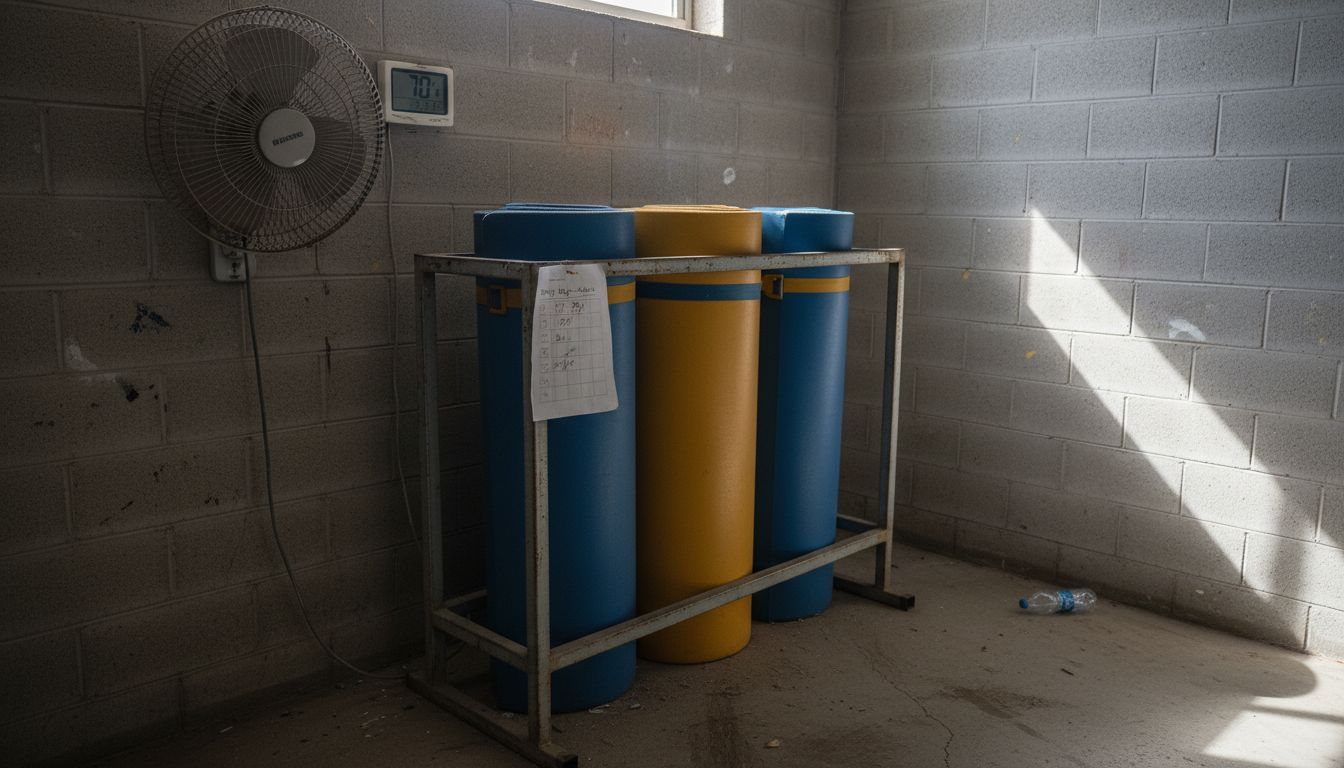
Storage method dramatically impacts longevity. Never fold gymnastics mats during storage. Folding creates stress points that crack foam and vinyl over time. Instead, roll mats loosely or store them flat.
Pro Tip: Mark one end of each mat with tape. Always roll from the same end to maintain consistent curvature and prevent irregular wear patterns.
Rack storage optimizes space while protecting mats. Organizing mats on racks reduces compression damage and improves lifespan by approximately 15%. Dedicated storage keeps mats off floors where they collect dust and moisture.
Handling procedures matter:
- Always carry mats with adequate staff, minimum two people for mats over 4 feet
- Avoid dragging mats across floors, which tears vinyl and damages edges
- Use mat carts or dollies for moving multiple mats efficiently
- Keep mats away from sharp objects and equipment during transport
| Storage Method | Lifespan Impact | Space Efficiency | Cost |
|---|---|---|---|
| Flat stacking | Neutral to negative | Low | Minimal |
| Rolling | Positive (prevents creases) | Medium | Low |
| Rack system | Highly positive (15% extension) | High | Moderate |
| Wall mounting | Positive | Very high | Higher |
Environmental factors require attention. Store mats in climate-controlled areas between 60°F and 75°F. Extreme temperatures degrade foam and adhesives. Avoid damp basements or hot attics.
Rotate mat positions regularly. If some mats see heavier use than others, swap their positions monthly. This distributes wear evenly across your inventory, preventing premature failure of frequently used pieces.
Invest in quality GymLab gymnastics mats designed for durability. Superior construction withstands proper maintenance routines better and delivers longer service life than budget alternatives.
Expected results and metrics to track success
Proper maintenance delivers measurable benefits. Understanding these outcomes helps justify time and resource investment.
Maintenance routines extend lifespan from an average of 5 years to over 8 years in commercial settings. This represents a 60% increase in usable life, dramatically improving return on investment. Track purchase dates and retirement dates to calculate your facility's average mat lifespan.
Safety improvements prove even more valuable. Regular maintenance reduces incidents related to mat failure by over 40%. Fewer injuries mean happier athletes, reduced liability risks, and better facility reputation. Monitor and document any mat-related incidents.
Key performance indicators to track:
- Average mat lifespan in years
- Injury incidents attributed to mat condition
- Replacement frequency and costs
- Athlete and parent satisfaction scores
- Odor or hygiene complaints
Hygiene benefits extend beyond safety. Well-maintained mats eliminate unpleasant odors that drive athletes away. Clean, fresh-smelling facilities attract new members and retain existing ones. Survey athletes and parents about facility cleanliness regularly.
Metric Spotlight: Facilities following comprehensive maintenance protocols report 85% fewer odor complaints and 90% higher satisfaction ratings for equipment condition compared to those with minimal maintenance.
Financial impact becomes clear over time. Calculate total cost of ownership, including purchase price, maintenance supplies, staff time, and replacement frequency. Facilities investing in proper maintenance spend 30 to 40% less over five years despite higher upfront care costs.
Document everything. Maintain logs showing cleaning dates, inspection findings, repair actions, and replacement decisions. This data proves maintenance value to administrators and helps optimize future equipment purchases.
Benchmark against industry standards. Compare your mat lifespan and incident rates to published commercial facility averages. Significant deviations indicate either exceptional maintenance or areas needing improvement.
Learn more about gymnastics mats and gear
Maintaining your gymnastics mats properly maximizes their safety and longevity, but it starts with quality equipment designed to withstand rigorous use. GymLab gymnastics mats combine durable construction with materials that respond well to proper care routines, giving your facility the foundation for long-term performance.

As a trusted gymnastics equipment manufacturer, GymLab provides comprehensive product specifications, warranty information, and maintenance guidance to support your facility's success. Explore their full range of professional gymnastics equipment, from landing mats to training apparatus, all built with the quality and safety standards your athletes deserve.
FAQ
What cleaning agents are safe for gymnastics mats?
Use diluted pH-neutral cleaners specifically formulated for gym equipment. Mix according to manufacturer instructions, typically between 1:10 and 1:20 ratios. Avoid bleach, ammonia, oil-based products, and industrial solvents, as these degrade foam and adhesives that hold mats together.
How often should gymnastics mats be inspected for damage?
Inspect mats weekly using a systematic checklist covering tears, cracks, seam separations, and compression damage. Train coaching staff to perform quick visual checks before each practice session. Schedule professional assessments annually to catch subtle structural issues that routine checks might miss.
What is the best way to store gymnastics mats to avoid damage?
Roll mats loosely rather than folding them to prevent creases and cracks. Store rolled or flat mats on dedicated racks or shelves in climate-controlled areas between 60°F and 75°F. Never stack mats too high, as bottom layers suffer compression damage that creates permanent indentations.
Can harsh chemicals shorten the lifespan of gymnastics mats?
Yes, harsh chemicals reduce mat lifespan by up to 30% by breaking down adhesive bonds and degrading foam cores. Bleach, solvents, and acidic cleaners cause irreversible damage. Always use pH-neutral cleaners designed specifically for gym equipment to protect your investment and maintain warranty coverage.
How long can proper maintenance extend the usable life of gymnastics mats?
Proper maintenance extends mat lifespan from approximately 5 years to over 8 years in commercial facilities. This 60% increase results from consistent daily cleaning, weekly inspections, monthly deep cleaning, and correct storage practices. Facilities following comprehensive protocols report significantly fewer premature replacements and lower total ownership costs.